Glute training that isn't just hip thrusts (and why yours aren't growing)
Why your glutes aren't growing: the three things hip thrusts miss, the exercises that load the glutes stretched, and how much weekly volume you actually need.
In this article
Hip thrusts are good, they're just not the whole job
The hip thrust deserves its reputation. It loads the glutes hard at full hip extension, it's easy to progress, and you can move real weight safely. If your glutes aren't growing, the problem usually isn't that hip thrusts are bad. It's that they're the only thing you're doing.
Every exercise trains a muscle hardest in one part of its range. The hip thrust hits the glutes at the top, where they're shortened and squeezed. That's useful, but muscles also grow well when they're loaded in a stretched position, and the thrust barely touches that. Train only the top and you leave a big chunk of the muscle under-stimulated.
The three things a thrust-only plan misses
1. The stretched position. Exercises where your hip is deeply flexed under load (deep squats, walking lunges, Bulgarian split squats, Romanian deadlifts) put the glutes under tension while they're long. That stretch is a strong growth signal most glute routines skip.
2. Abduction. Your glute medius, the upper-side portion, pulls your leg out to the side and stops your knee caving in. Thrusts and squats don't train it directly. Cable abductions, the seated abduction machine, banded work and lateral movements do, and they're a big part of what gives the hip that capped look from the side.
3. Enough different angles. The glutes are a large muscle group with fibres running in more than one direction. Hitting them from a few movement patterns (extension, squat, hinge, abduction) covers more of the muscle than any single lift can.
A glute week that actually covers the muscle
A well-rounded week might include:
- A hinge, Romanian or conventional deadlifts for the stretched, loaded position
- A squat pattern, deep squats or Bulgarian split squats, which many people feel in the glutes far more than back squats
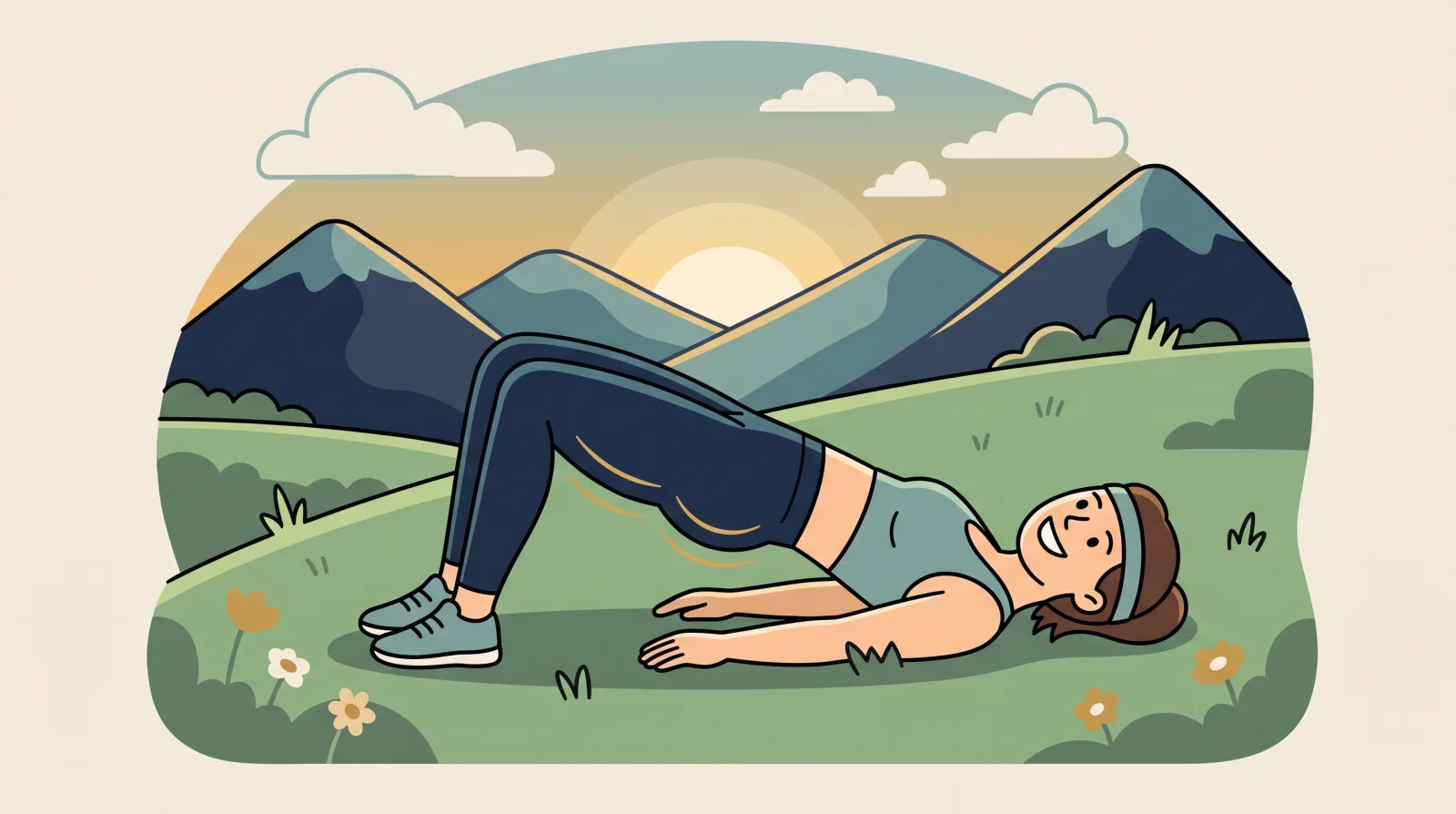
- A thrust or bridge, for the top-end contraction the thrust does so well
- Direct abduction, cable or machine, a couple of times a week
Volume and load: the unglamorous part
Two more reasons glutes stall, and they've got nothing to do with exercise selection:
- Not enough volume. Glutes respond to work like any muscle. Most people need at least 10 hard sets a week to grow them, and many do better toward the higher end of the weekly volume range. A few sets of thrusts tacked onto leg day usually isn't enough.
- No progression. If you've thrust the same weight for the same reps for three months, your glutes have no reason to change. The weight, the reps, or the range has to creep up over time, which is plain old progressive overload.
Feeling it vs training it
An honest note: the glute pump and the mind-muscle connection are nice, but they aren't the whole story. You can feel a burn from a light band and still not give the muscle much reason to grow. Chasing that burn on easy exercises while avoiding hard, loaded squats and hinges is one of the most common ways glute training stalls.
Bottom line
Keep the hip thrusts, then build around them. Add loaded stretch through squats, split squats and RDLs, train abduction directly, get your weekly volume into double digits, and make the work harder over time. Glutes grow on the same rules as every other muscle. They just tend to get trained with a fraction of the variety they need.
Join the Ascend waitlist, see exactly how much of your week actually reaches your glutes.
FAQ
Common questions
Why aren't my glutes growing from hip thrusts?
Hip thrusts only load the glutes hard at the top of the movement. Without loaded-stretch work (deep squats, split squats, RDLs), direct abduction, enough weekly volume and steady progression, a big part of the muscle stays under-stimulated.
What's the best glute exercise besides hip thrusts?
There isn't a single best one. Romanian deadlifts, deep squats and Bulgarian split squats load the glutes in a stretched position, while cable or machine abductions train the glute medius that squats and thrusts miss.
How many sets per week for glutes?
At least 10 hard sets a week for most people, and often more if glutes are a priority. Spread them across a hinge, a squat pattern, a thrust and some direct abduction.
Do I need to feel a glute pump for it to work?
No. A strong pump on a light band doesn't guarantee growth. Loaded, progressively harder squats and hinges matter more than chasing a burn on easy exercises.

Sam Wilson
Founder of Ascend Fitness. Building a gamified fitness tracker from Christchurch, NZ. Lifts, runs, and writes about both.
Start the climb
Turn today's read into tomorrow's first log.
Ascend Fitness is in private beta. Join the waitlist, early climbers jump the TestFlight queue and get a heads-up the day it drops.