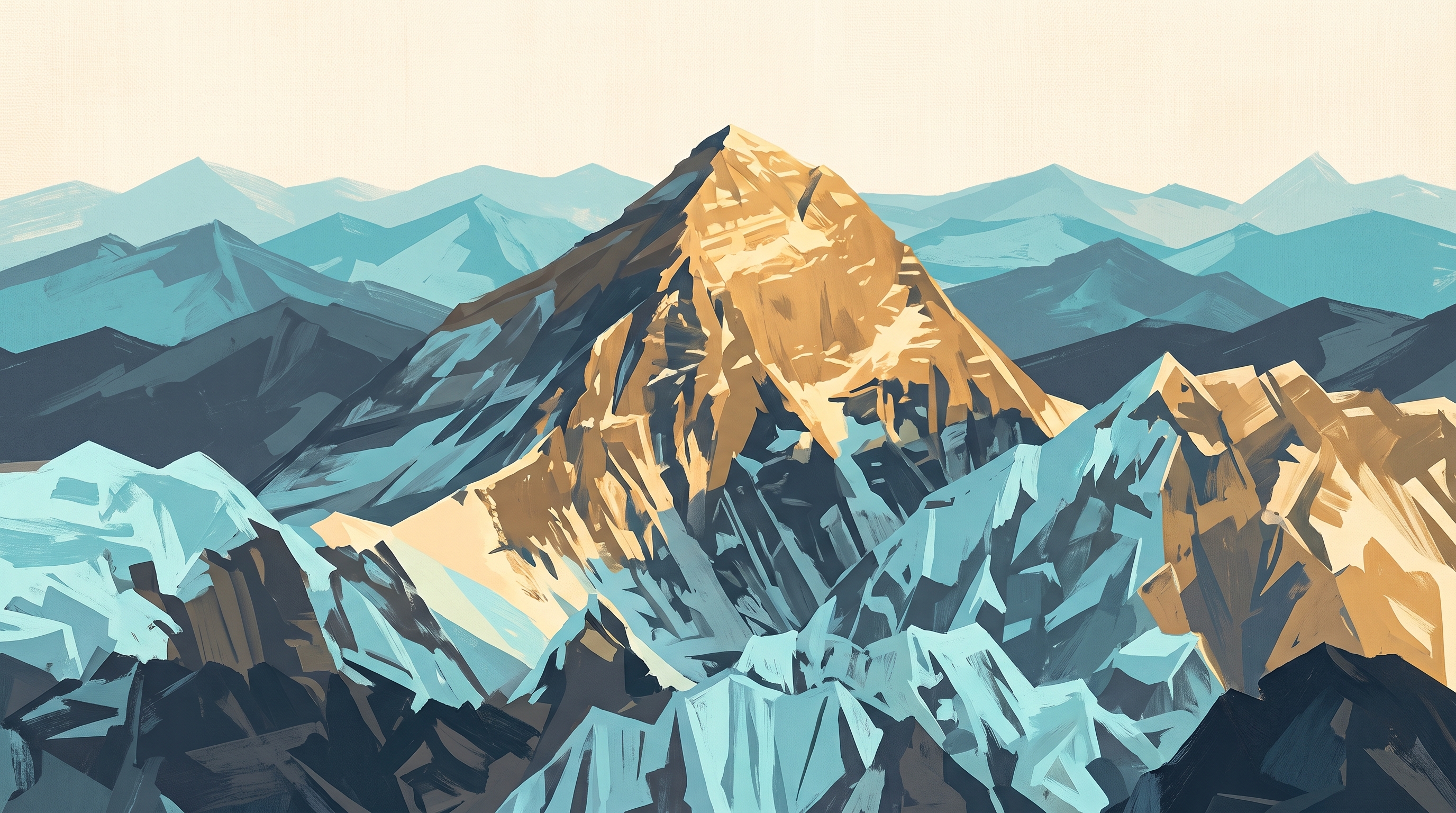
Everest
Everest is the legend peak. 8,849 metres. About 240 days, eight months, of consistent training to summit. The Everest summit badge in Ascend isn't gamified vanity; it's a year of your real training, visualised as the world's tallest mountain.
- Elevation
- 8,849m
- Country
- Nepal / Tibet
- Workouts
- ~200
- Days
- ~240
Climb Everest, unlock the next peak.
Summit a mountain and you unlock the visual upgrades, badges, and progression tier below.
- Death-Zone climbing animations + oxygen mechanic
- 365-day legend streak badge
- Permanent profile flair: 'Summited Everest'
- After Everest: optional expansion peaks to keep climbing
Why Everest is in the climb progression.
Everest is the peak the whole app is built around. A year of training is hard to feel. A year of climbing Everest is hard to ignore.
Best for climbers like this.
Long-haul Ascend climbers. People building a serious long-arc training base. Athletes who want a calendar-year goal that isn't a body-comp number.
Train for Everest, 52 weeks.
Everest (8,848 m) requires ~12 months of structured training, ideally one prior 7,000 m+ climb, and 2+ months on the mountain itself. This is a full-year athletic commitment.
| Weeks | Focus | Cardio | Strength | Hike / Summit |
|---|---|---|---|---|
| Months 1–3 | Base | 5 × zone-2 (60 min) | 3 × full body | 1 long hike/week, 1,200 m vertical |
| Months 4–6 | Build + 6,000 m peak | 4 × zone-2 + 1 × tempo | Heavy posterior chain | Climb one 6,000 m peak (Island Peak / Lobuche East / Ama Dablam BC) for altitude exposure |
| Months 7–9 | Peak training + acclimation block | Sustained 4-h carries | Max-strength + grip | If possible, climb a 7,000 m peak (Mera Peak / Putha Hiunchuli) |
| Months 10–11 | Taper + travel | Maintenance | Maintenance | Travel to Kathmandu, fly to Lukla. |
| Month 12 | On-mountain, Khumbu to Summit | Acclimation rotations, rest cycles | , | BC → C2 → C3 → C4 → Summit. Wait for window. |
Gear checklist
- Insulated mountaineering boots (rated cold)
- Crampons compatible with your boot
- Ice axe (general mountaineering, ~60–70 cm)
- Climbing harness + 3 locking carabiners
- Helmet (UIAA certified)
- Down jacket + hard shell + insulated bibs
- Goggles + ski-style sun glasses
- Mid-weight + heavy-weight gloves
- Headlamp (300 lumen +) with spare batteries
- Expedition-grade -29°C sleeping bag
- Closed-cell + inflatable sleeping pads (R 5+ combined)
- Expedition tent (4-season)
- Stove + fuel for cold-weather cooking
- Pee bottle (cold-night hack)
- Oxygen system (Everest only)
- Oxygen mask + regulator (most use supplemental O₂)
- 8,000 m down suit
- Triple-boot system (Olympus Mons / Phantom 8000)
- Heated socks + boot warmers (optional but smart)
Elevation profile
Start: 5,364m → Summit: 8,848m
Even Everest can be scaffolded in Ascend, 12 months of progressive load with the AI coach reading readiness signals weekly. Realistically pair with a guide service and a doctor.
Everest: your questions.
How long does Everest take?
About eight months of consistent training, typically 200+ logged sessions. Heavier loggers finish in six months. Casual climbers take a full year.
What happens after Everest?
Optional expansion peaks unlock, Mt Whitney, Mont Blanc, Kilimanjaro, Fuji and the Burj Khalifa skyline, so there's always a next climb if you want to keep going.
Is there a leaderboard for Everest summits?
Yes, the Everest Hall is a public-by-default profile shelf showing all climbers who've reached the summit. You can opt out in Privacy settings.
Lock in your founder spot. Climb Everest first.
Waitlist members get TestFlight + Play Store internal track invites and a founder badge on their profile.