What one year of lifting actually looks like (the honest timeline)
Not the highlight reel, the real month-by-month of a first year lifting. What changes, when it changes, why most people quit at month three, and how to make sure you're not one of them.
In this article
# What one year of lifting actually looks like
Everybody shows you the dramatic before-and-after. Almost nobody shows you the boring, uneven, occasionally demoralising middle, which is a shame, because the middle is where the whole thing is won or lost.
Here's the honest month-by-month of a first year of consistent lifting. Find where you are on it. If you're in the hard part, know that the hard part is the part everyone has to walk through.
Months 1–2: everything hurts, nothing shows
You're sore in muscles you didn't know existed. The weights feel heavier than they look. You check the mirror and it looks exactly the same. This is the steepest, least rewarding part of the curve, and it's where roughly 80% of people quit.
Your only job in these two months is to keep showing up. Don't chase intensity, don't compare yourself to anyone, don't expect visible change. Build the habit of walking in the door. That's the entire goal.
Months 3–4: the lifts start moving
Something clicks. The bar that felt impossible in week two now feels manageable. This is newbie gains, your body is so responsive to the new stimulus that strength climbs fast.
For the first time it feels like it's working, because it visibly is. Your logged numbers go up almost every session. Lean into it: this window is a gift and it doesn't last forever.
Months 5–8: people start noticing
Clothes fit differently. Someone asks if you've been working out. You catch a glimpse in a window and do a double take. The changes that were invisible to you because you see yourself every day are now obvious to people who don't.
More importantly, the gym is just part of your week now. It's not a heroic act of willpower to go, it's a normal Tuesday. That shift is the real milestone.
Months 9–12: it becomes who you are
You don't "try to go to the gym" anymore. You go. Plateaus arrive, and instead of quitting, you adjust and push through, because you've learned that stalls are part of the process, not a sign to stop.
This is identity-level change. You're not a person trying to get fit; you're a person who trains. That's the most durable result of the whole year, and it's the one that keeps the next year going.
Why the timeline breaks for most people
Look back at the curve. The reward (months 3–4) sits *right after* the hardest stretch (months 1–2). People quit in month two, weeks before it was about to get good. They mistake the hardest part for the whole thing.
The fix isn't more motivation, motivation is the worst predictor of long-term results. The fix is a system that makes the invisible months feel like progress so you survive long enough to reach the visible ones.
How Ascend keeps you on the curve
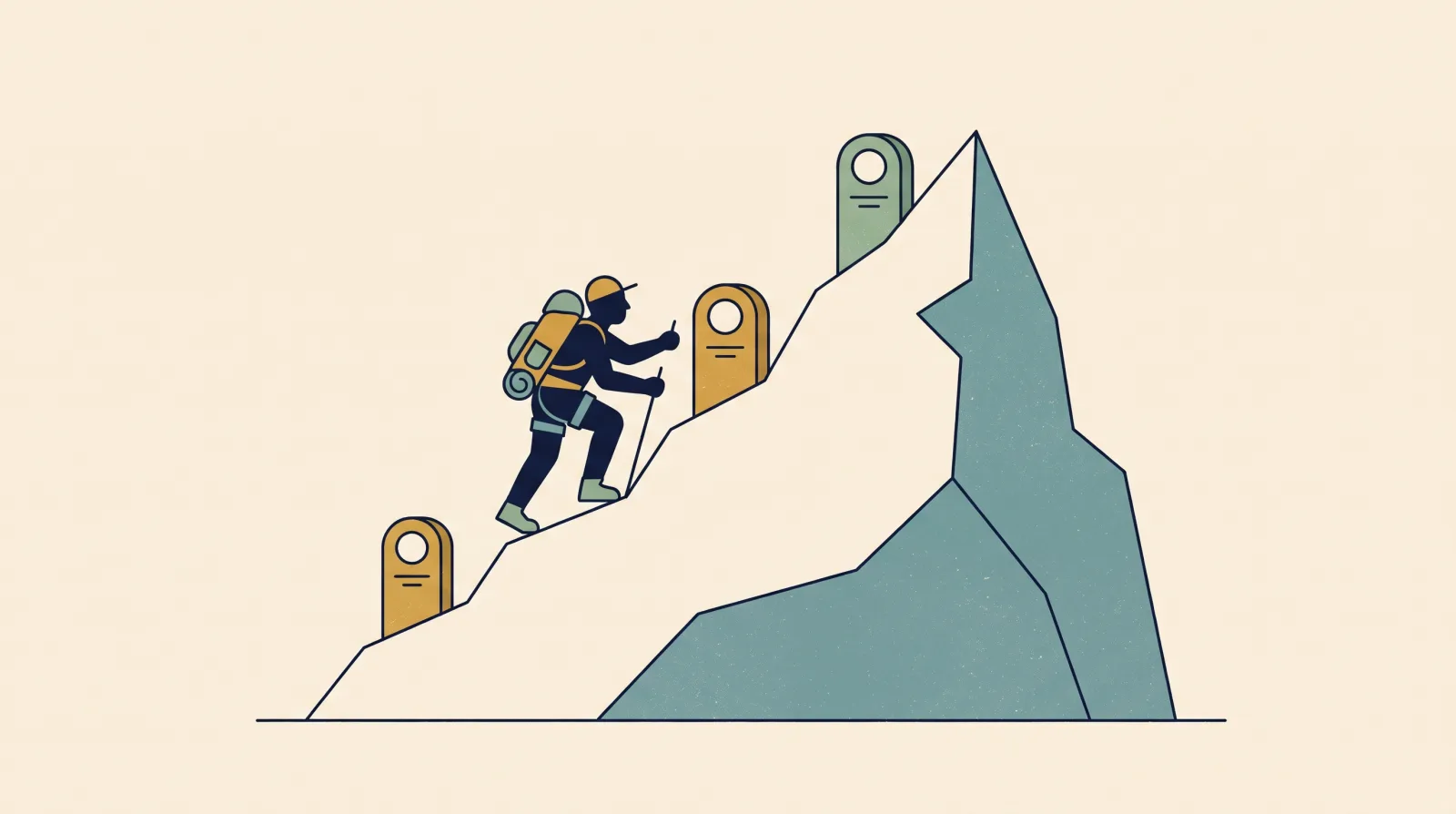
Ascend turns the year into a mountain you're climbing. Every workout, even in the brutal first two months, is elevation gained, visible, stacking, undeniable. When the mirror isn't rewarding you yet, the climb is. That's what carries people through the part where they'd otherwise quit.
Join the waitlist and start a climb you can actually see.
FAQ
Common questions
How long until you see results from lifting?
Strength gains start within 2–4 weeks. Visible body composition changes that others notice usually appear around months 3–6 of consistent training and decent nutrition. The timeline depends heavily on diet, sleep and consistency.
Why do most people quit lifting in the first 3 months?
Because the first two months are the hardest part of the curve: everything is sore, the weights feel heavy, and the mirror barely changes. The reward comes right after, which is why the people who push past month three usually stick with it for good.
Are newbie gains real?
Yes. Untrained beginners build strength and muscle faster than at any later point because the body is highly responsive to new stimulus. This 'newbie gains' window typically lasts 6–12 months and is why early progress feels so fast.

Sam Wilson
Founder of Ascend Fitness. Building a gamified fitness tracker from Christchurch, NZ. Lifts, runs, and writes about both.
Start the climb
Turn today's read into tomorrow's first log.
Ascend Fitness is in private beta. Join the waitlist, early climbers jump the TestFlight queue and get a heads-up the day it drops.